Thought leadership
Spatial computing is not 3D

Marlin Prager
January 14, 2026
•
3 min read

When Avatar was released in 2009, the film didn’t just break box-office records; it triggered a wave of stereoscopic movies and a rush by theaters to upgrade their technology. For many people, 3D suddenly felt like the future. Then the novelty wore off, and the technology stalled. But this period shaped lasting perceptions: “3D” became synonymous with cinematic spectacle, including special glasses, dramatic visuals, and the illusion of depth on screen. When newer spatial technologies emerged, they inherited this language. 3D still conjures images of Avatar when, in reality, something far more expansive has been taking shape.
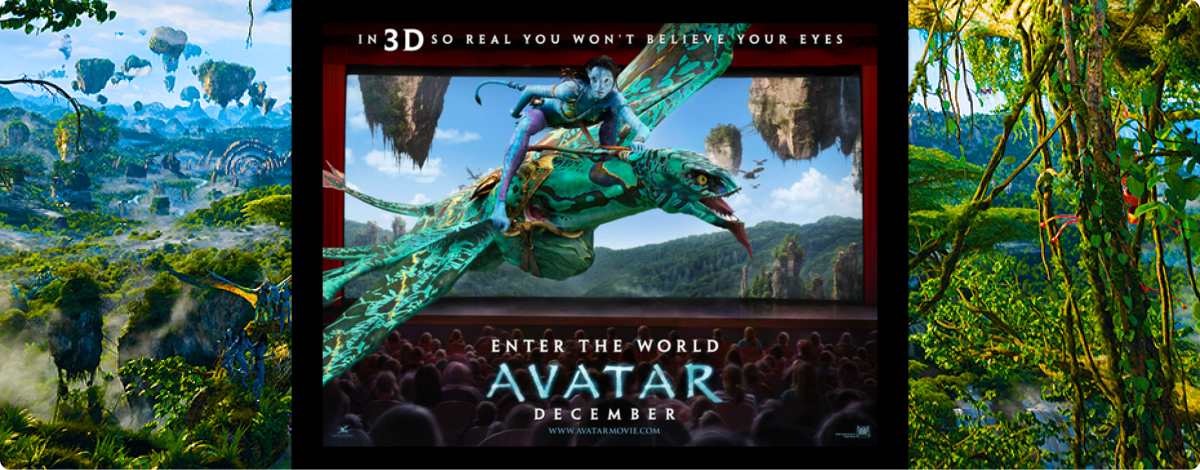
Ad for Avatar in 2009 showcasing 3D
The 3D most of us know is designed to enhance how things look, not how we interact with them. Stereoscopic 3D works by showing each eye a slightly different image, creating a sense of depth. You can look around, but you remain in one place. You can’t step closer to an object, walk around it, or explore it the way you would in the physical world. It’s an enhanced viewing experience, but fundamentally passive.
Spatial computing grows directly from these limitations. Rather than focusing on visual depth alone, it concerns how digital content exists and behaves in space. Digital objects aren’t just seen, they’re placed, moved, and interacted with as if they occupy the same world we do. The difference may seem subtle, but it’s profound: three-dimensional visuals convey depth; spatial computing enables interactivity.
The idea itself is not new. The term “spatial computing” was first used in 2003 to describe a future in which computers understand space as humans do, recognizing distance, movement, and relationships between objects. What has changed is not the idea, but our ability to deliver on it.
When Meta acquired Oculus and later released the Quest headset, immersive experiences gained mainstream visibility. Virtual (VR) and augmented reality (AR) entered public conversation, often framed as the next big platform. But this visibility reinforced another misconception: that spatial computing requires wearing a headset.
In reality, most spatial computing already happens without one. Smartphones and web browsers are the most common spatial computing tools in the world today. When you use your phone to place a virtual sofa in your living room, try on a pair of Meta RayBans, or view directions overlaid on the street, you are engaging in spatial computing. The device matters less than the experience: it’s the digital content that responds to its surroundings.
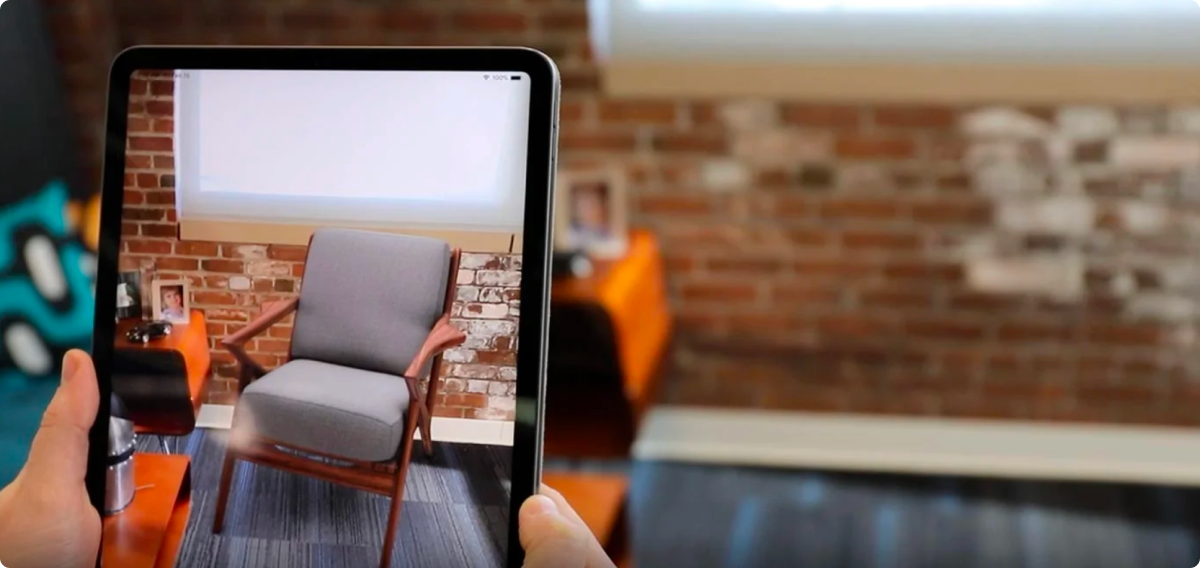
AR product configurator for furniture.
Headset fidelity still matters in certain settings. In factories, training environments, and field operations, hands-free interaction and immersive focus can be extremely practical. For these use cases, head-mounted devices offer capabilities that phones and tablets can’t easily match. But they’re best understood as part of a broader ecosystem, not as the definition of spatial computing itself. Looking ahead, smart glasses are likely to play an increasingly important role. But unlike bulky headsets, these devices aim to blend into everyday life while still supporting spatial interaction. As the technology matures, spatial computing will feel less like something we “enter” and more like something that quietly supports us as we move through the world.
As with any emerging technology, there are gimmicks everywhere (experiences designed to impress rather than endure). Beyond its novelty, spatial computing is already proving its value. Retailers use it to help customers visualize products before buying. Architects and developers walk through buildings before they’re built. Trainers and educators teach skills safely and realistically. In each case, spatial computing works because space itself is central to understanding the task.
What we’re witnessing is not a replacement of 3D but an evolution in how it’s used. Terms such as “3D assets” should increasingly be understood within the context of spatial computing. They are objects designed to exist and behave in space, rather than artifacts of movies and visual effects. This shift in language reflects a deeper shift in purpose.
Spatial computing is not about recreating cinematic moments. It’s about helping digital systems understand the physical world and work within it. Its success won’t be measured by spectacle, but by how naturally technology fits into how we already see, move, and interact.
At Miris, this distinction is foundational. When we move beyond 3D as a visual trick and see spatial computing for what it is (a way of thinking, designing, and interacting), its real potential comes into focus.