How Miris rebuilt its brand from first principles: infrastructure that recedes so customers can lead. By Jeffrey Gardner.
Training environments were built as frozen artifacts. Adaptive 3D streaming makes them composable at photoreal fidelity, so the simulated world can change.
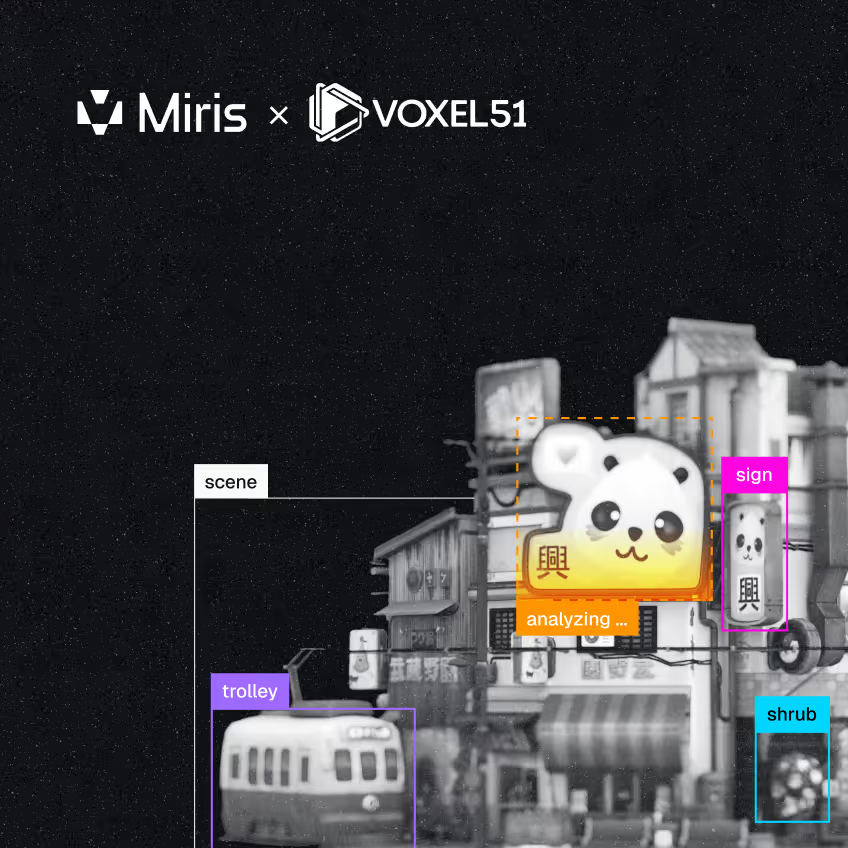
Miris spatial streaming is now in FiftyOne. Physical AI teams can stream full-fidelity 3D into their data workflows without cloud GPUs, starting today.
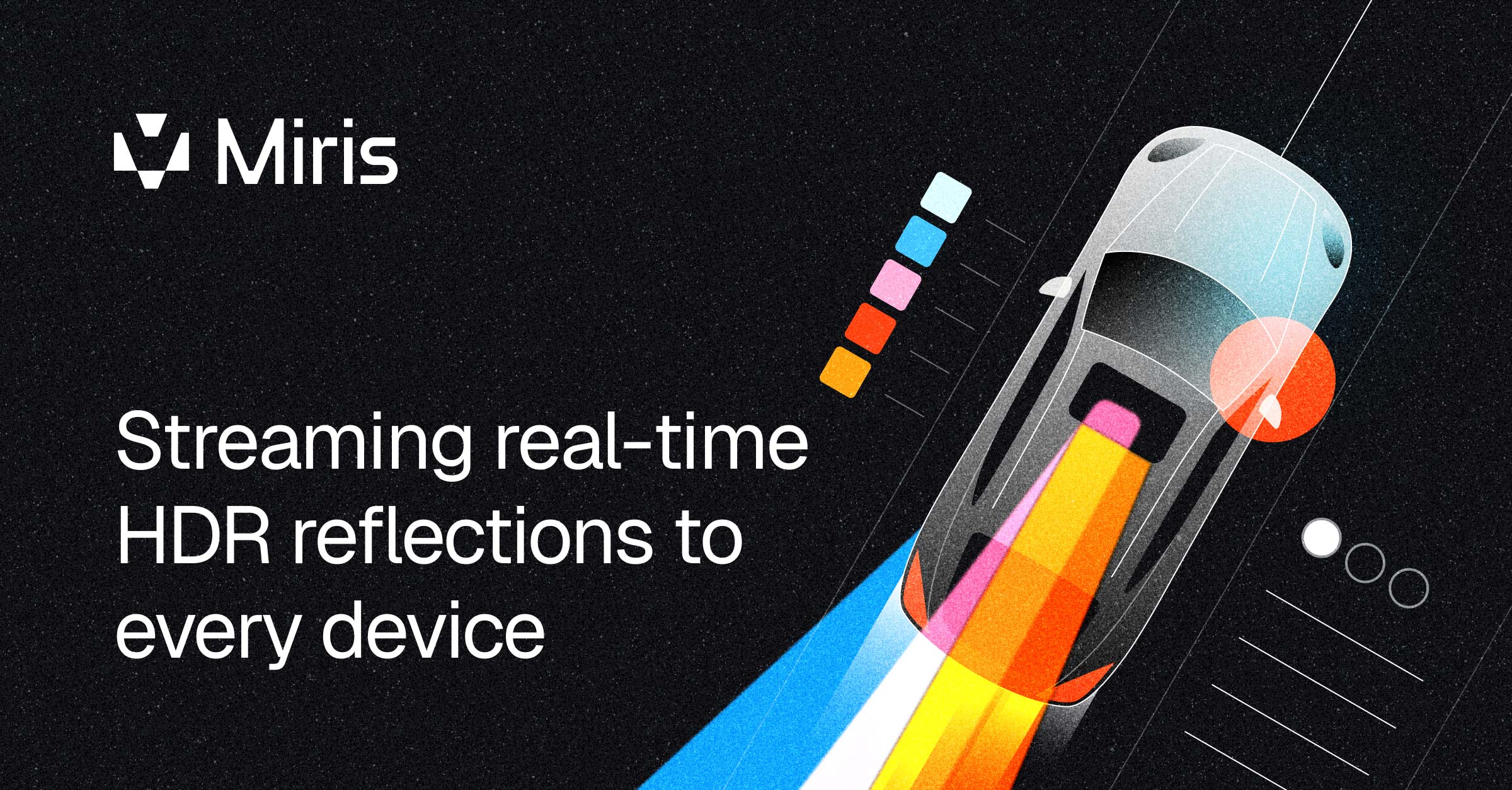
Miris streamed a 1.2GB 3D vehicle asset with real-time HDR reflections on automotive paint across headsets, tablets, and browsers via WebXR.
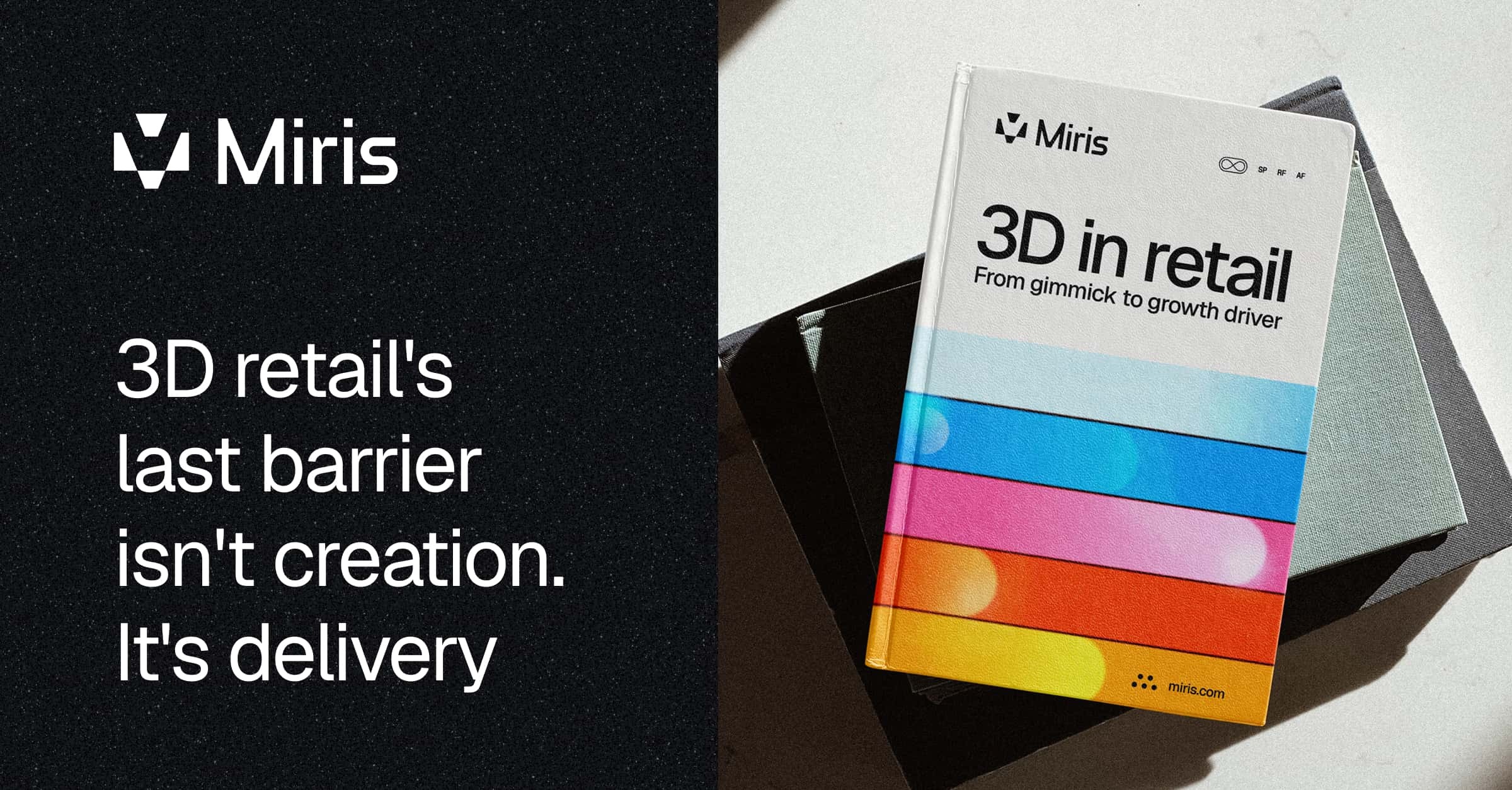
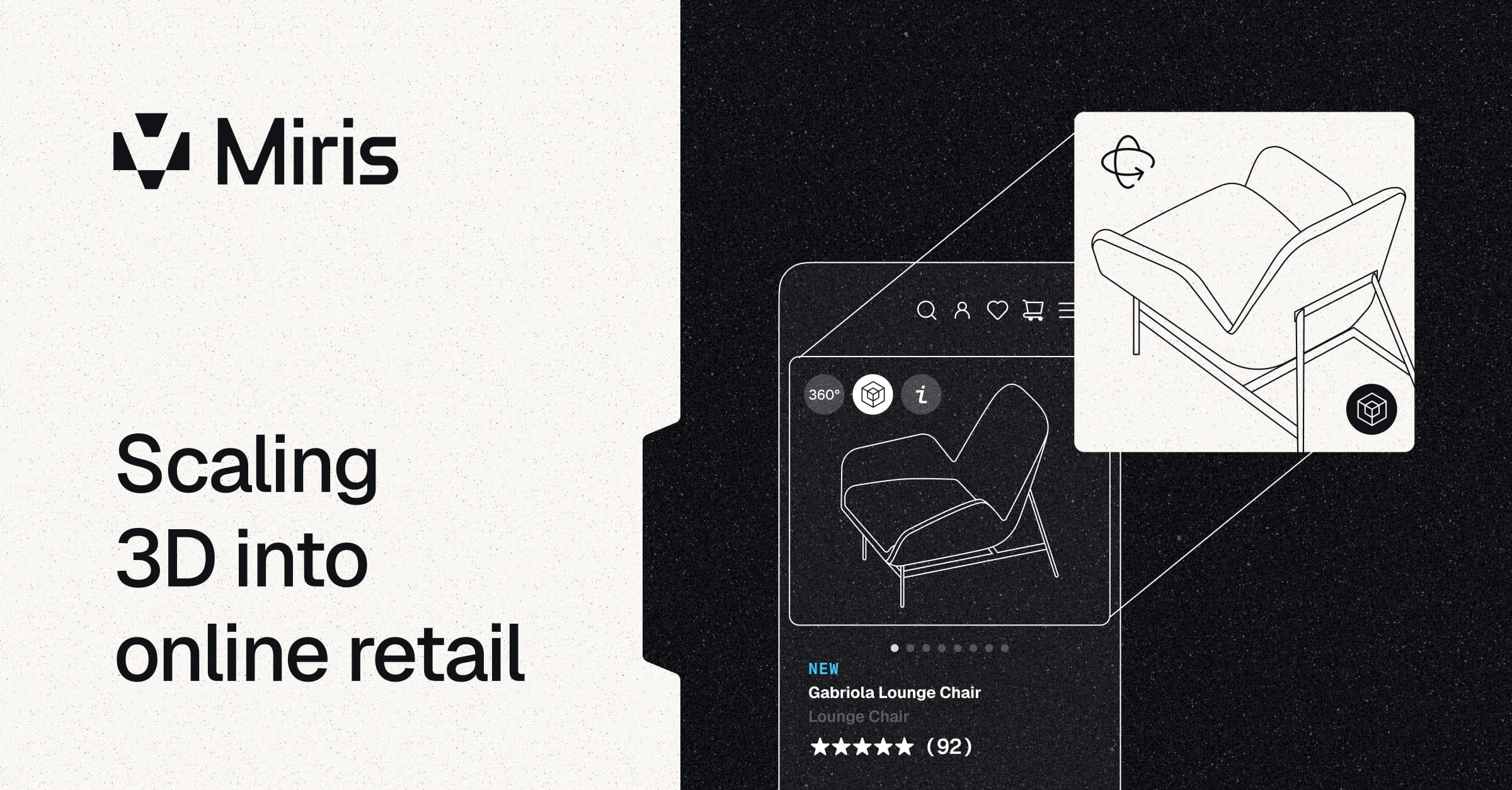
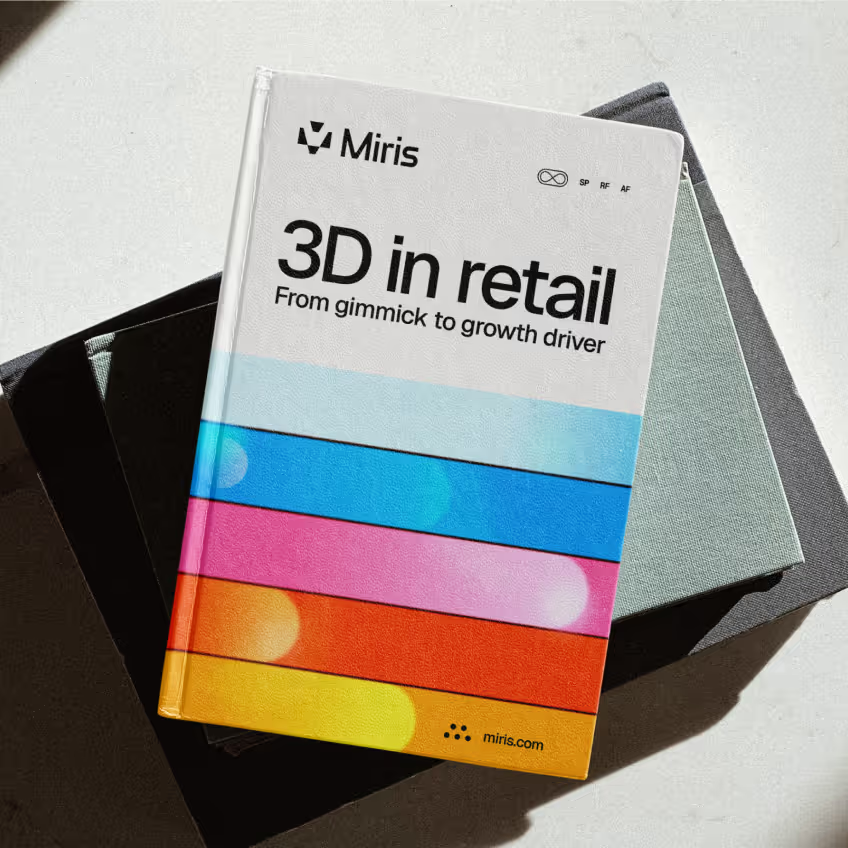
3D in retail roughly doubles conversion and cuts returns by 40%. The data is no longer theoretical. The last barrier to enterprise scale is delivery.
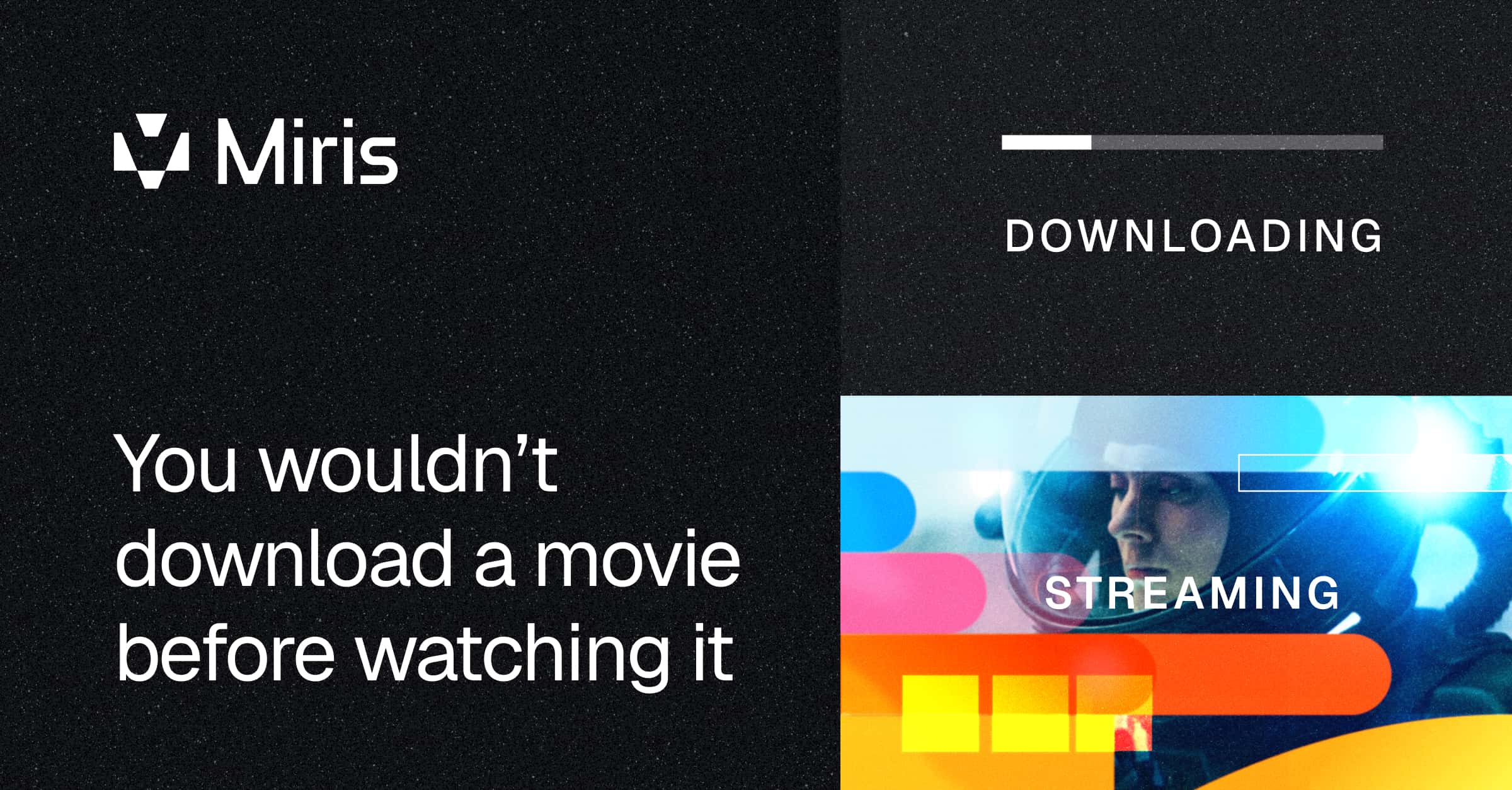
Most 3D on the web still downloads before it renders, pushing past the 10-second attention limit. Streaming brings first frame under one second.
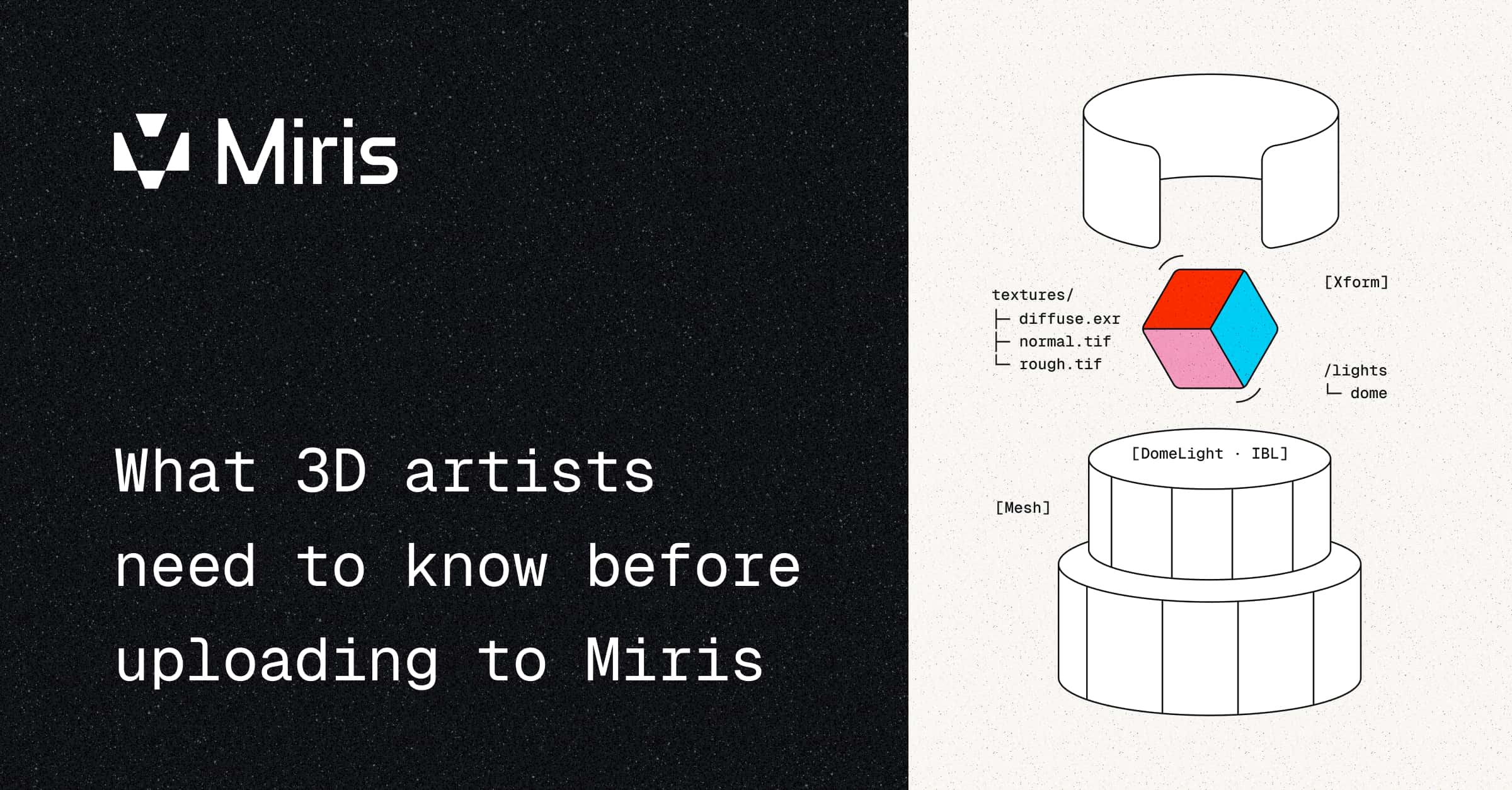
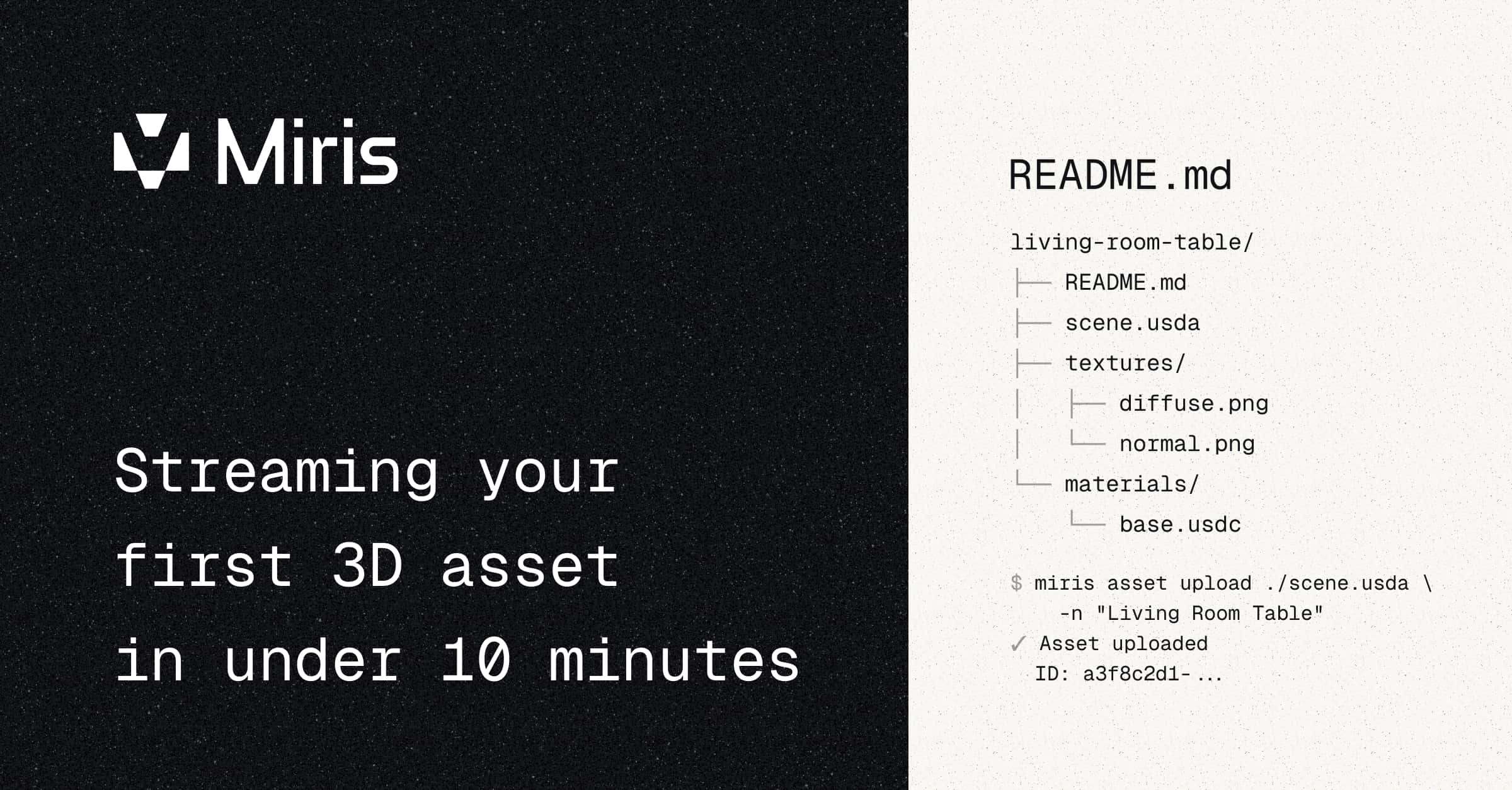
A practical guide for 3D artists uploading assets to Miris: what formats to use, how to preview, and how to share your first streamable asset.
Miris and Cavrnus bring spatial streaming into collaborative 3D environments. Review the real asset together, on any device, in real time.
Upload a USD file to Miris, generate a streamable version, preview it in the browser, and share it — no code required, no downloads for the recipient.
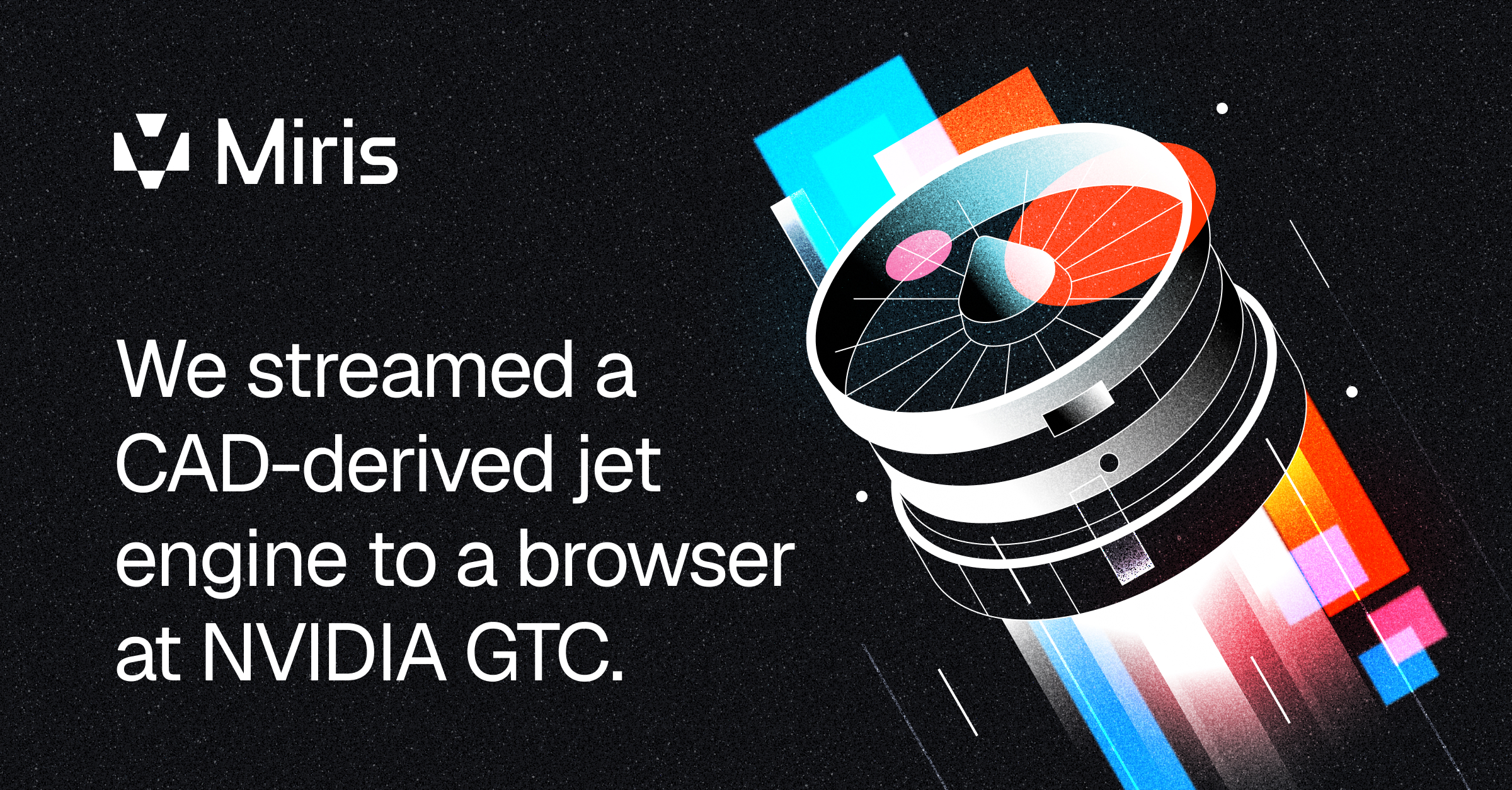
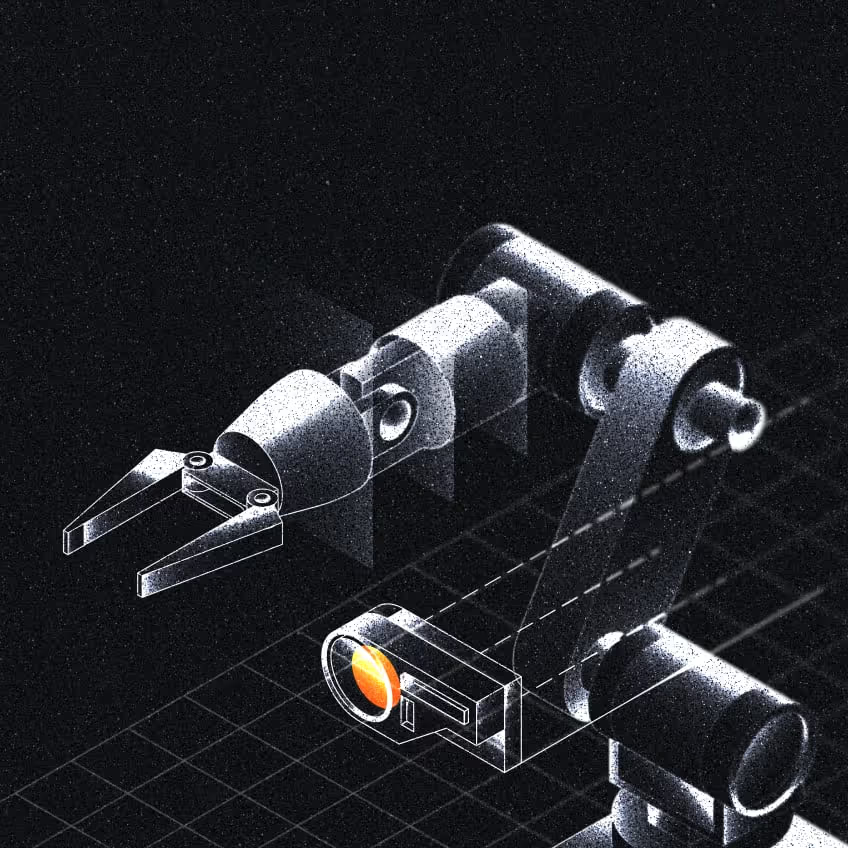
Miris streamed an engineering-grade jet engine digital twin at NVIDIA GTC, a new pattern for delivering Physical AI assets to any device.
Miris public beta launches today. Teams can sign up, upload OpenUSD assets, and stream adaptive high-fidelity 3D to any device.
Miris brings spatial streaming into Voxel51's platform, letting Physical AI teams visualize high-fidelity 3D reconstructions without cloud GPUs.
Why 3D delivery requires its own infrastructure stack — leveraging GPU compute and adaptive streaming for scalable, high-fidelity digital asset delivery.
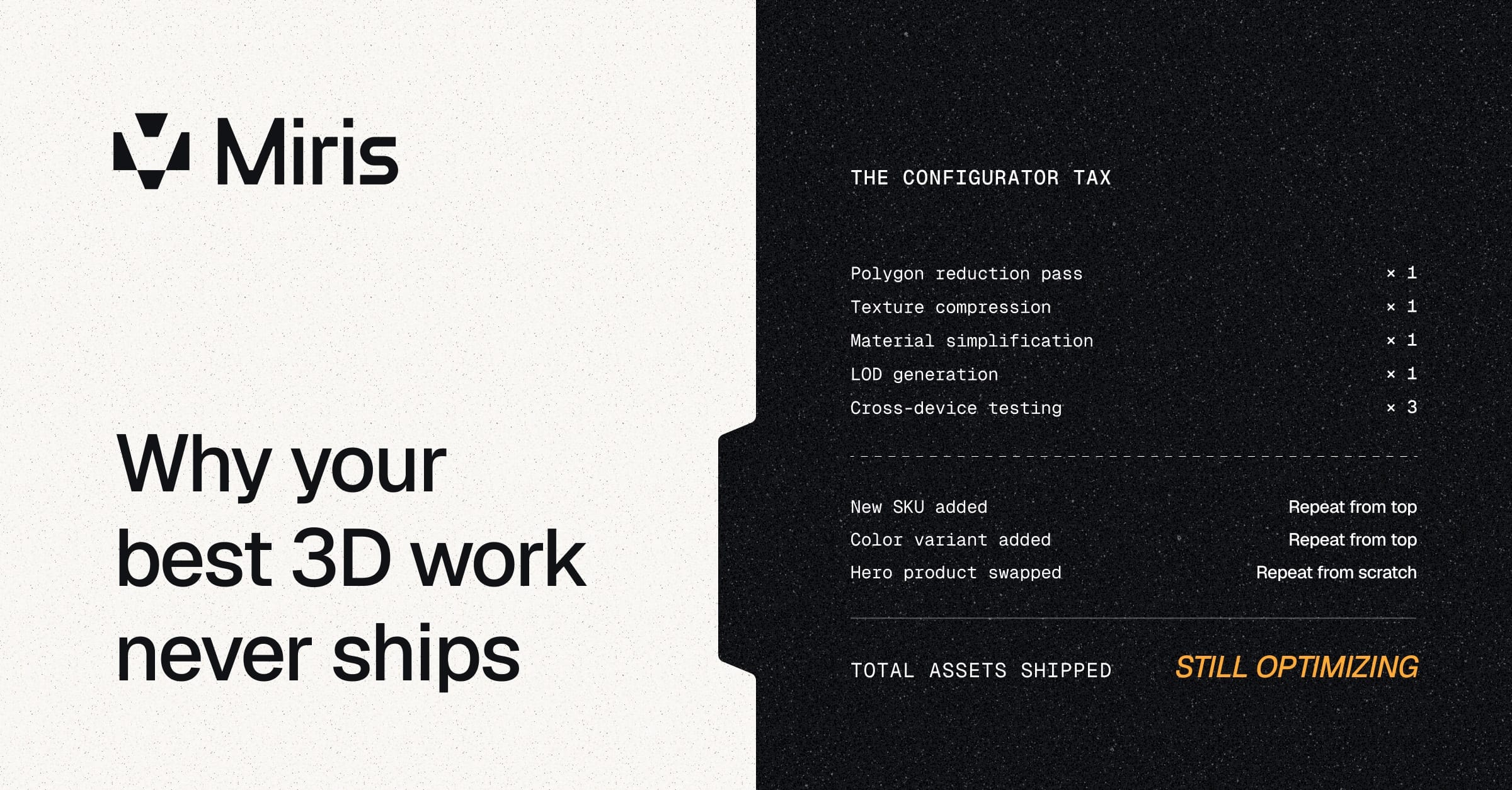
glTF solved real problems for lightweight web 3D delivery. But when teams push beyond its design constraints, the optimization tax reveals a structural limit.
Learn how Playbook and Miris enable interactive 3D asset reviews in the browser, streamlining workflows and reducing miscommunication.
Every configurator project starts the same way. A client approves a photorealistic render. Your team quotes the build. Then reality sets in.
Miris public beta opens March 24. Adaptive spatial streaming delivers high-fidelity 3D to web browsers instantly, eliminating client-side rendering tradeoffs.
3D product visualization lifts conversion 40%, but per-SKU optimization keeps it boutique. Streaming changes the economics for full retail catalogs.
Why field-based 3D representations like Gaussian splatting outperform meshes for streaming high-fidelity 3D content on the web, especially on mobile devices.
Stereoscopic 3D creates depth you can see. Spatial computing creates objects you interact with, already happening on phones, browsers, and headsets.
Why 2026 marks the turning point for 3D distribution catching up with creation, as innovative streaming solutions bridge the infrastructure gap.
Learn how Miris revolutionizes high-fidelity 3D streaming, enabling scalable, real-time delivery to millions without slow downloads or costly hardware.
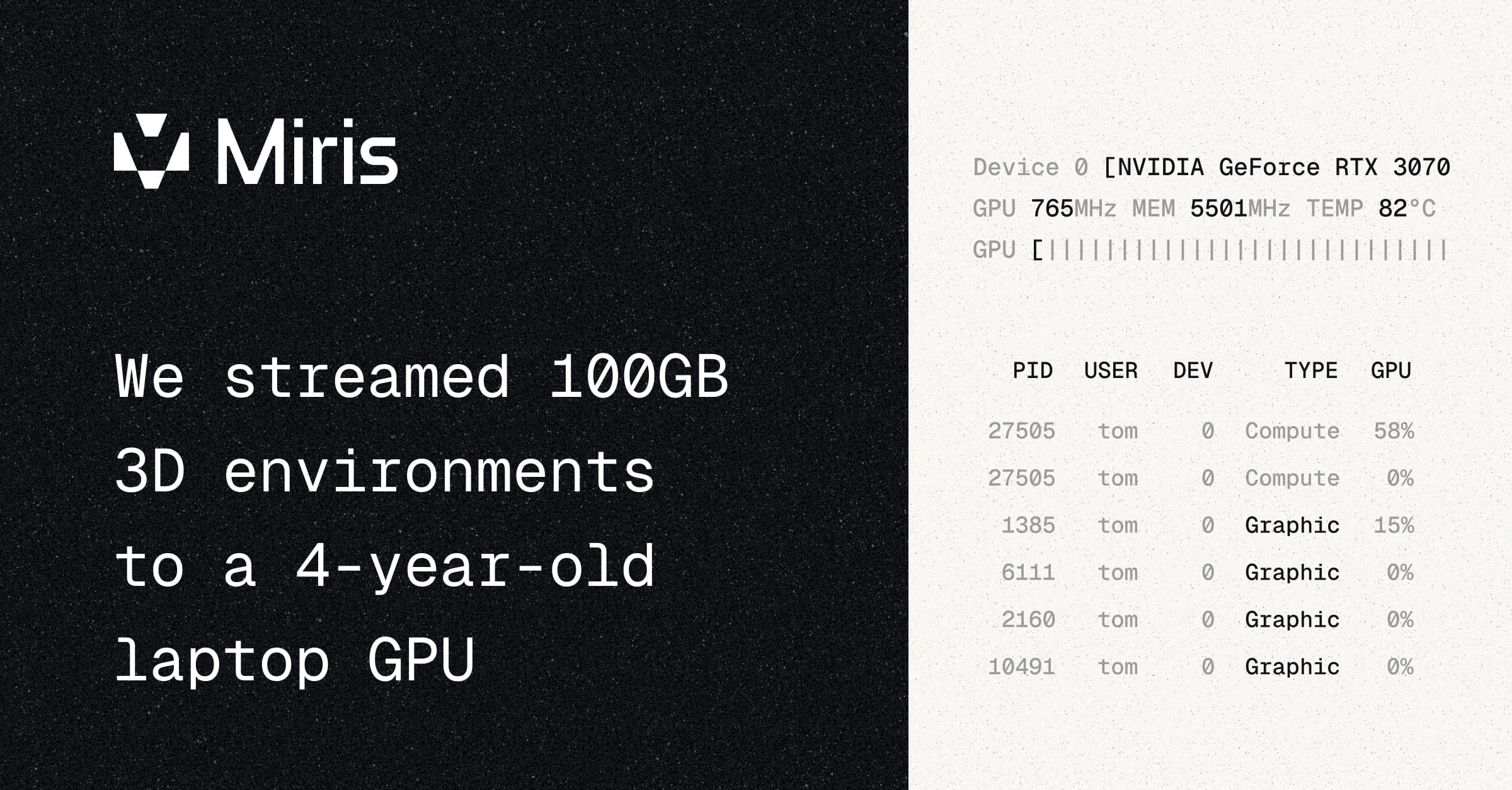
Miris streamed over 100GB of 3D environments to a 4-year-old laptop GPU, showing high-fidelity large-scale 3D can run on modest hardware without compromise.
Miris builds infrastructure to stream interactive 3D spatial content instantly and device-agnostically, making high-fidelity 3D accessible at scale.















.jpg)