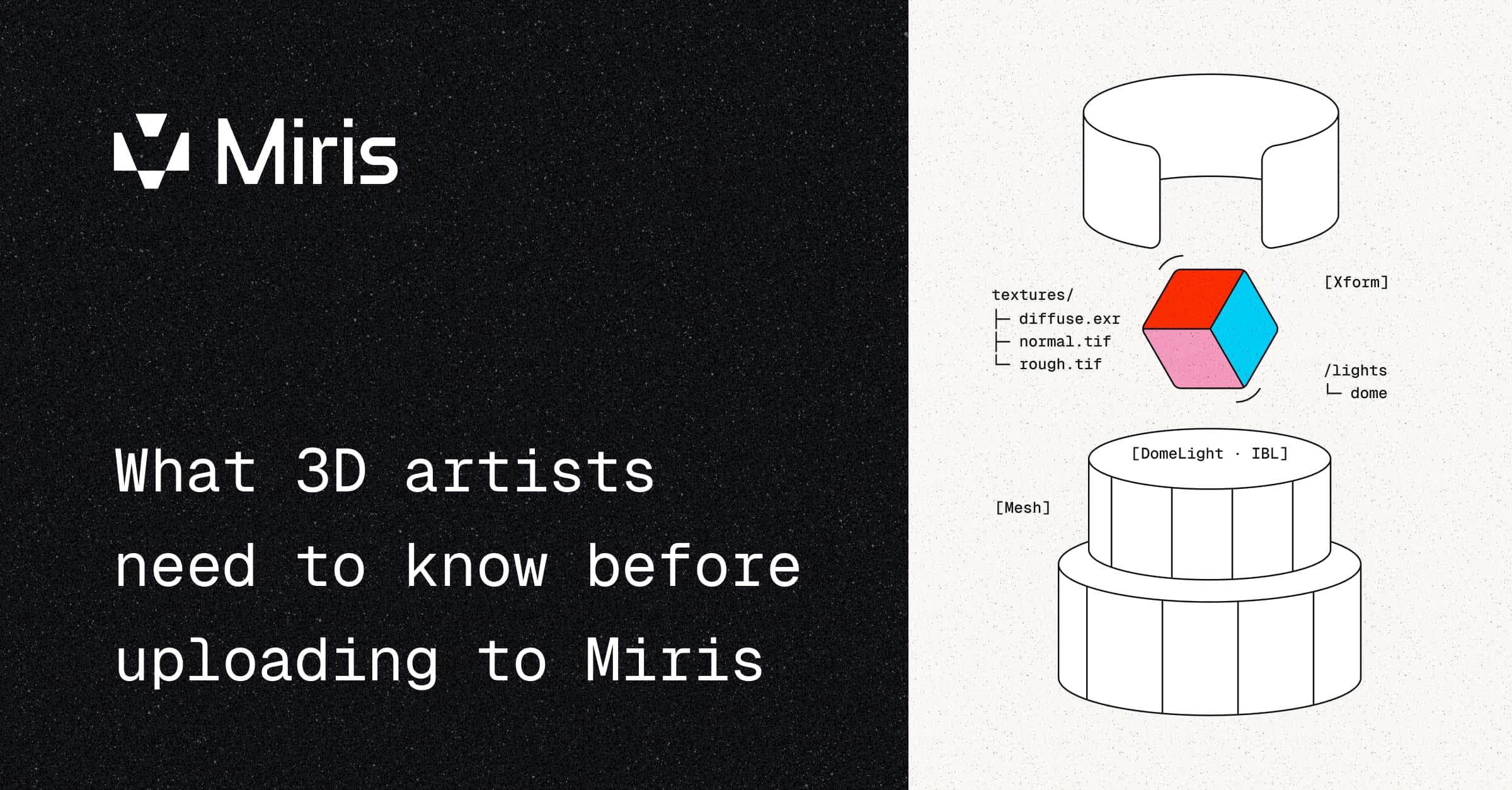
Upload OpenUSD, glTF, FBX, or Gaussian Splat assets up to 10 GB. Miris compiles them into Streamable Assets ready for low-latency 3D streaming.
Real-time 3D streaming that negotiates fidelity the way video adapts bitrate. The runtime requests denser geometry and higher-resolution textures for the region in frame, drops budget for off-screen, and preserves frame rate across desktop, mobile, and XR.
Real-time session telemetry and per-asset analytics: first-frame load times, CDN cache hit ratios, session counts, device class breakdown, and quality tiers. Export metrics to Datadog, Snowflake, or S3 via @miris-inc/components.
Drop the Miris Web SDK into any React, Vue, or three.js app — or @miris-inc/core for Babylon.js and PlayCanvas. WebGPU, WebXR sessions, adaptive LOD, and Viewer Key auth work out of the box.
Compiled Streamable Assets distribute across the Miris edge network. Cold-start requests serve from the nearest PoP; warm requests from device-local cache. Re-publishing rolls forward atomically without breaking sessions in flight.
Share streamable 3D assets with clients and teammates as easily as sharing an image. Send a Viewer Key link — recipients open it in any browser, with no plugin install, no per-platform builds, no downloads.


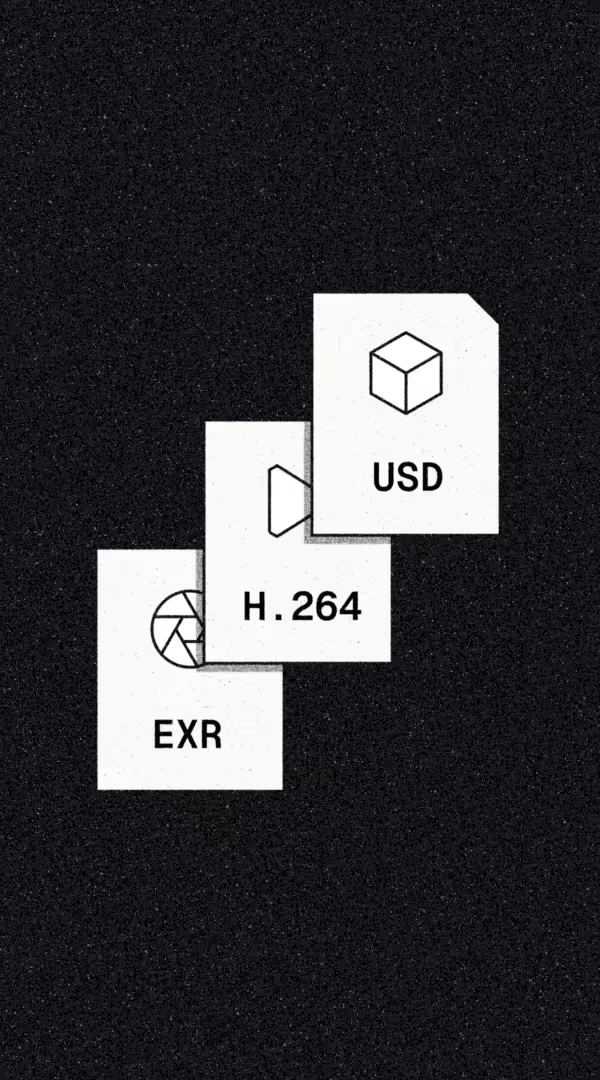



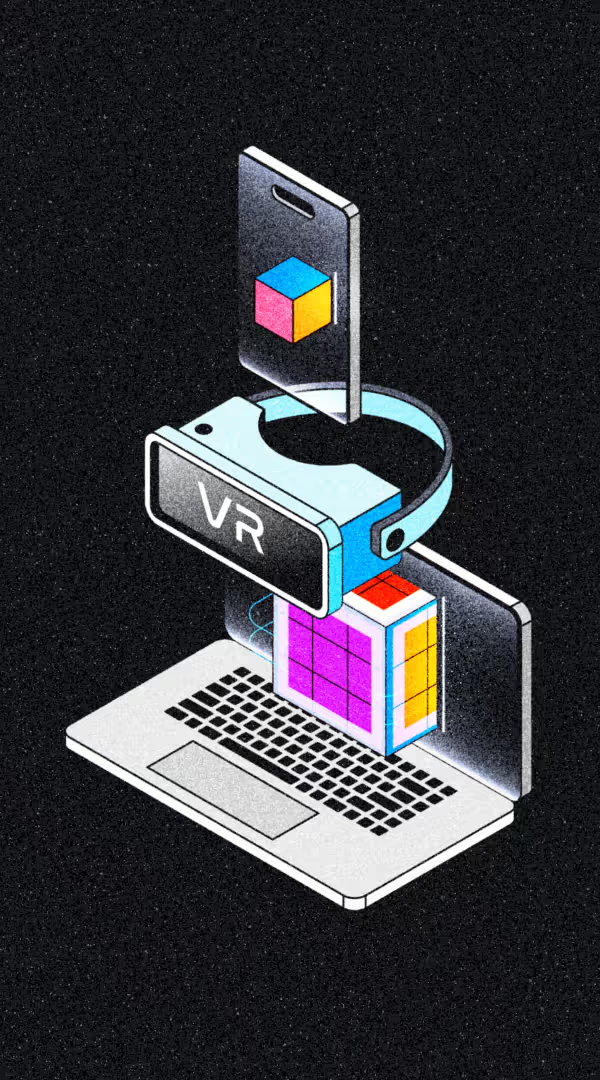

Import any 3D asset in OpenUSD format. Miris accepts models up to 10GB with textures, materials, and lighting data intact. Author in your digital content creation tool of choice, whether you’re working with CAD models, photogrammetry scans, or game assets, start with what you have.

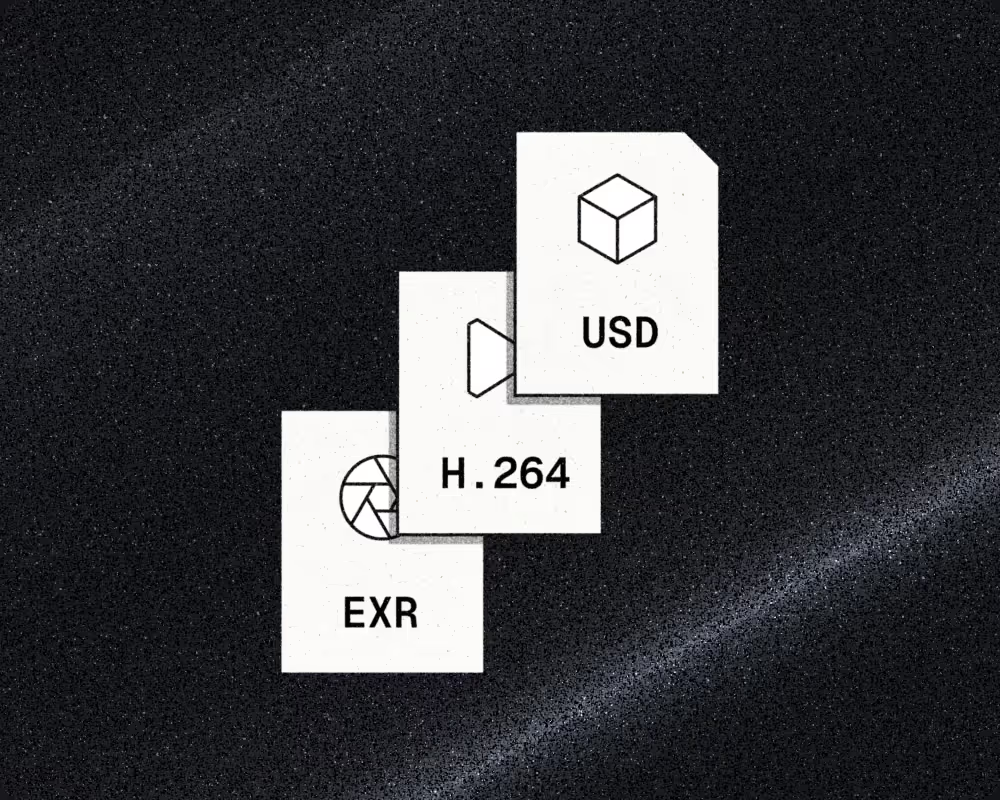

Miris converts your source file into a streaming-optimized format. Multi-resolution LODs are generated automatically. Geometry is compressed. Textures are optimized. Visual fidelity is preserved from the original. This is the foundation that makes adaptive delivery possible.


Miris analyzes each asset’s geometry complexity, texture resolution, and material composition to determine optimal compression and encoding strategies. The result: maximum visual quality delivered within your viewers’ bandwidth and device constraints. Quality adapts per viewport, per device, per network condition.
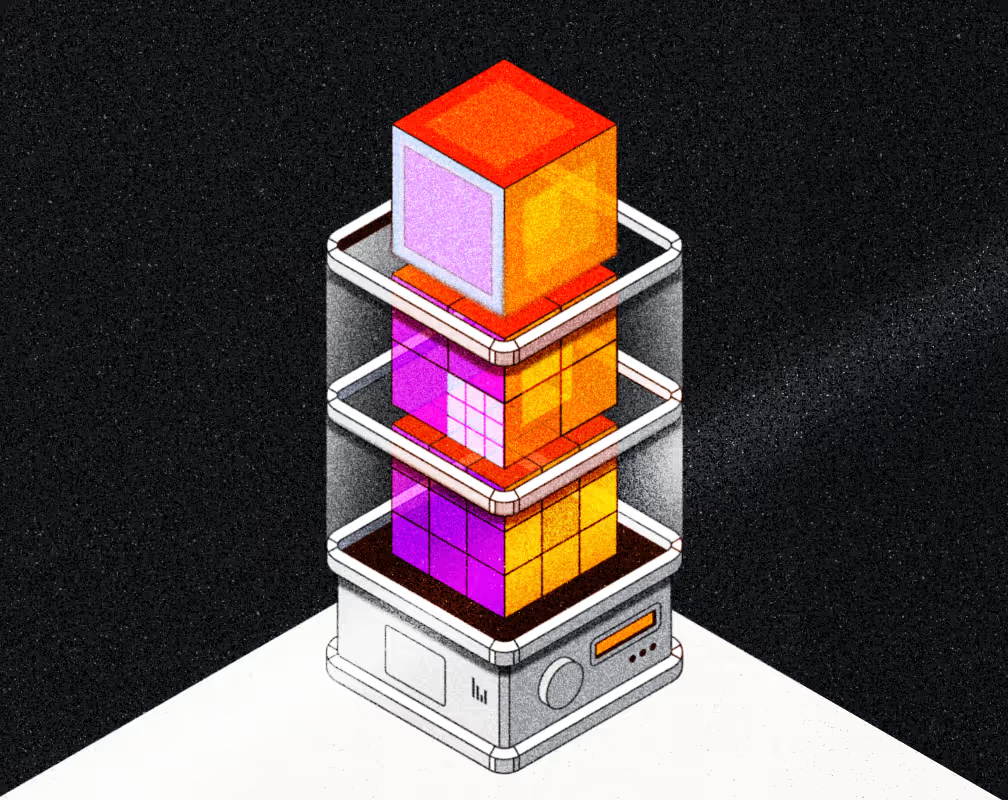

Your processed asset is now optimized for progressive delivery. Content is visible in seconds. Full detail loads as users explore. Quality transitions are automatic, adapting to viewport distance, device capability, and network conditions in real time.
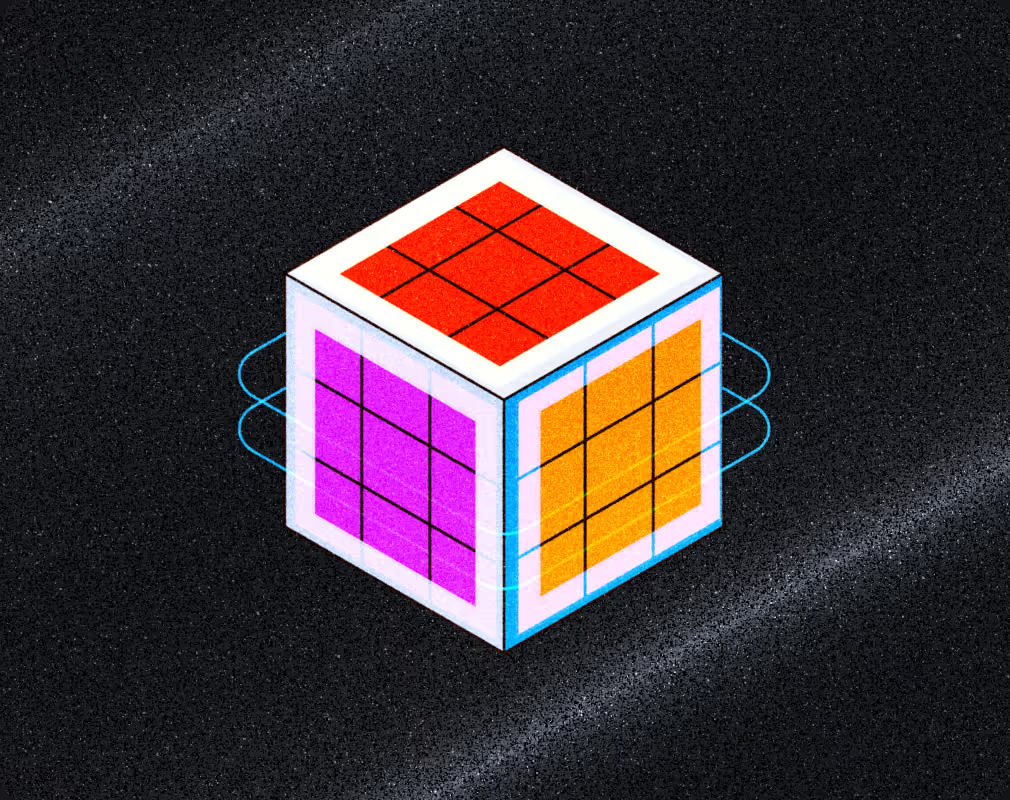

Miris routes your content through a global CDN. Assets are cached at edge nodes close to your users. Predictive loading ensures sub-second response times regardless of asset complexity or user location. No origin server bottleneck. Performance is predictable from day one.


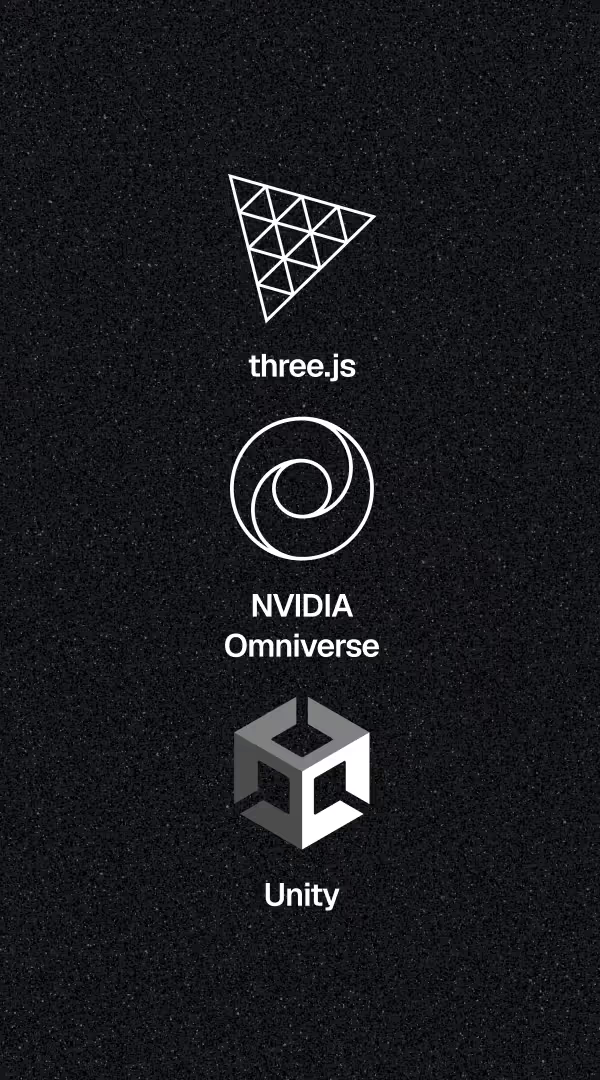
Connect Miris to the tools you already use. Drop a component into React, Vue, or vanilla JS — our Web SDK integrates directly with three.js as the runtime environment. No workflow changes. No re-architecture. Your tools, your pipeline, our delivery layer.

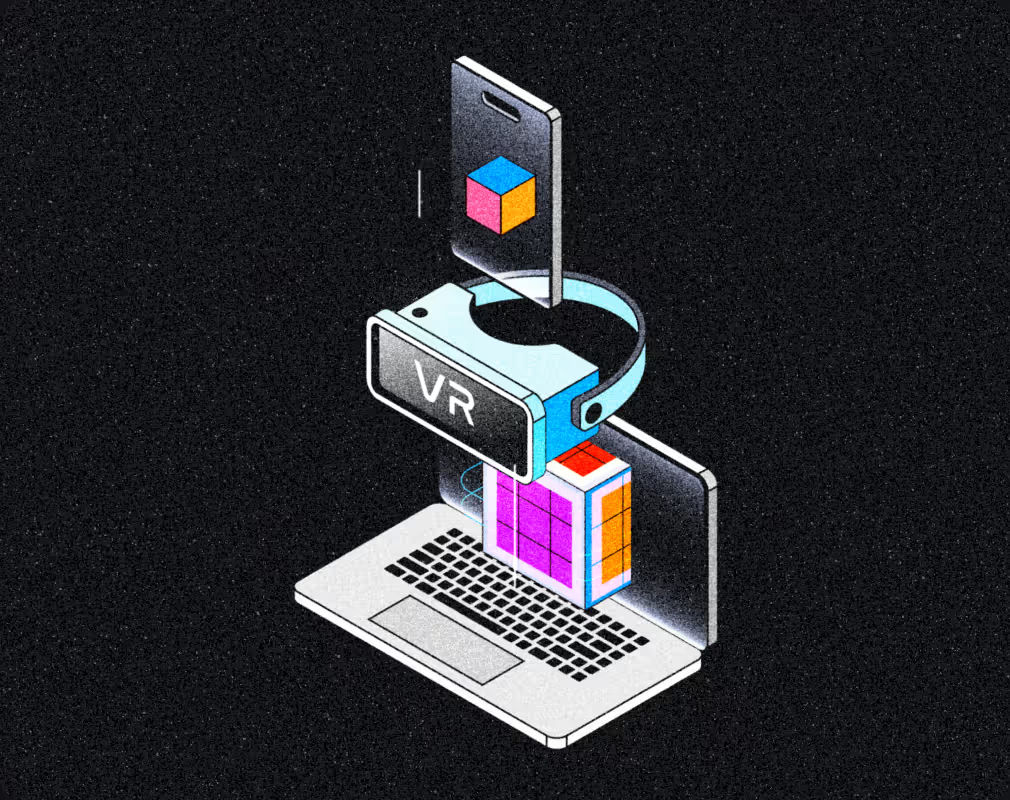
Embed in any web app with a React, Vue, or vanilla JS component. Your users don't download anything — they just open a link and see your model instantly, whether they're on a laptop, phone, or WebXR headset. One asset, one endpoint, every browser.
Import any 3D asset in OpenUSD format. Miris accepts models up to 10GB with textures, materials, and lighting data intact. Author in your digital content creation tool of choice, whether you’re working with CAD models, photogrammetry scans, or game assets, start with what you have.
Miris converts your source file into a streaming-optimized format. Multi-resolution LODs are generated automatically. Geometry is compressed. Textures are optimized. Visual fidelity is preserved from the original. This is the foundation that makes adaptive delivery possible.
Miris analyzes each asset’s geometry complexity, texture resolution, and material composition to determine optimal compression and encoding strategies. The result: maximum visual quality delivered within your viewers’ bandwidth and device constraints. Quality adapts per viewport, per device, per network condition.
Your processed asset is now optimized for progressive delivery. Content is visible in seconds. Full detail loads as users explore. Quality transitions are automatic, adapting to viewport distance, device capability, and network conditions in real time.
Miris routes your content through a global CDN. Assets are cached at edge nodes close to your users. Predictive loading ensures sub-second response times regardless of asset complexity or user location. No origin server bottleneck. Performance is predictable from day one.
Connect Miris to the tools you already use. Drop a component into React, Vue, or vanilla JS — our Web SDK integrates directly with three.js as the runtime environment. No workflow changes. No re-architecture. Your tools, your pipeline, our delivery layer.
Embed in any web app with a React, Vue, or vanilla JS component. Your users don't download anything — they just open a link and see your model instantly, whether they're on a laptop, phone, or WebXR headset. One asset, one endpoint, every browser.

The fidelity gap is costing you customers. Here's what finally closes it.



First frame renders in under 2 seconds. We stream what's visible first, then progressively load detail as users explore.

Assets stream at native resolution. Level-of-detail adapts automatically based on viewport and device capability.

Upload once, stream anywhere. Cross-platform delivery to phones or workstations — no manual optimization required.

You pay for what you stream, not for standing up or maintaining rendering infrastructure. No GPU servers.
Everything you need to know about Miris — the 3D streaming platform for real-time, interactive 3D content on web, mobile, and XR.


Streaming video reshaped media consumption; we're doing the same for 3D. Join a small team solving tough spatial streaming, content delivery, and developer experience challenges.


Technical deep-dives on adaptive spatial streaming, the infrastructure challenges of 3D at scale, and what we're learning as we build. Written by the team doing the work.