Product updates
Playbook + Miris: high-fidelity 3D asset review

Will McDonald
March 10, 2026
•
5 min read
 Web SDKREST APICLIPlayerPlayground

Not a creation problem. Not a rendering problem. A review problem.
When a team needs to evaluate a hero character, an environment asset, or a product model, the workflow typically looks like this: export a turntable video, post it to a thread, leave time-coded notes, and hope the person on the other end can infer what you mean from a 2D representation of a 3D object.
The alternative is barely better. Convert the asset to glTF, strip it down to something a browser can handle, and review a version that has lost the material accuracy, lighting response, and microdetail that matter most. Or open the full asset in a DCC tool, which limits review participation to people with the right software, hardware, and technical fluency.
Every one of these workarounds introduces the same tradeoff: the reviewer never sees what the artist actually built.
For material approvals, lighting evaluations, and detail-level QA, the gap between source fidelity and review fidelity is where miscommunication lives. It's where rounds of revision accumulate. And it's where production schedules quietly expand.
The root cause is a technical constraint, not a workflow preference. Until recently, streaming a high-fidelity 3D asset interactively to a browser required either rendering it on a cloud GPU (expensive, slow to scale) or degrading it to meet web format limits (cheap but visually lossy). Neither option was practical for production review at scale. So teams flattened their 3D into 2D, and the workflow suffered accordingly.
Here's how the integrated workflow runs for a studio reviewing a hero character.
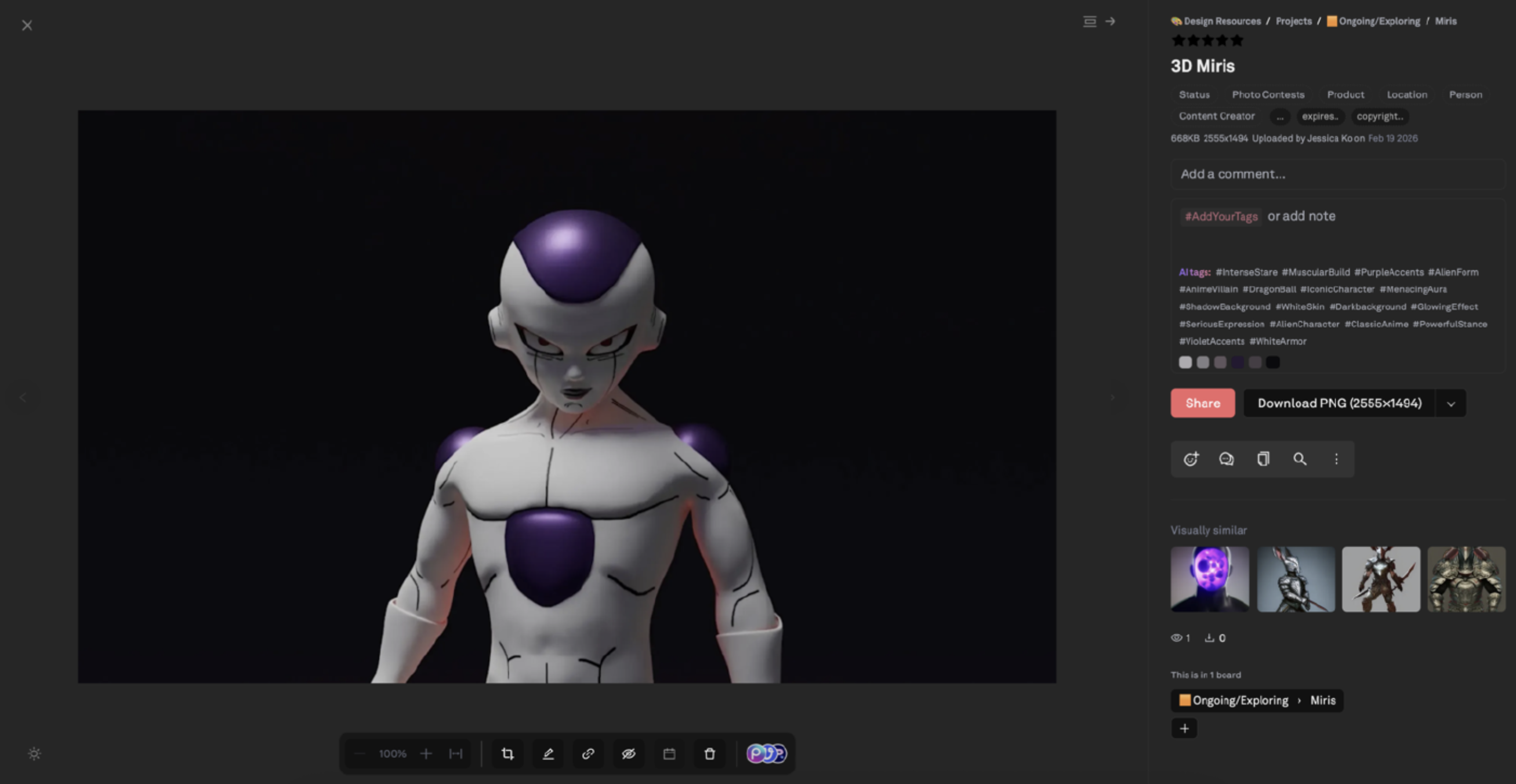
Step 1: Upload once, organize automatically. The technical artist or vendor uploads the source asset to Playbook. AI-driven metadata extraction and tagging make the content immediately searchable and organized, no manual effort required.
Step 2: Find what matters, not what someone happened to name the file. Instead of navigating folder hierarchies and guessing at naming conventions, teams search by the attributes that matter in production (such as character type, LOD status, material complexity, version state) and filter results accordingly.
Step 3: Stream high-fidelity 3D instantly. With Miris integrated, Playbook serves an interactive 3D stream directly in the asset detail view. Reviewers rotate the asset, inspect material response, and zoom into surface detail, in the browser, on any device. No export, no conversion, no DCC tool.
Step 4: Attach feedback where it belongs. Instead of time-coded notes on a turntable video or marked-up screenshots, reviewers reference specific geometry, materials, or surface details on the actual 3D asset. Feedback is unambiguous and tied to the work itself.
Step 5: Compare versions without losing context. When assets update, reviewers evaluate changes against prior iterations inside the same library view. Review history, annotation context, and version state stay intact.
The total workflow time decreases. The export-review-revise cycle shortens. The quality of feedback improves because reviewers are evaluating the real asset, not a representation of it.
Playbook is an AI-native media library built for production teams managing large volumes of creative content. Its core value is making large asset archives actually usable: automatic metadata extraction on upload, search that works the way creative teams think (by visual attributes and production context, not just filenames), and collaboration features including permissions, sharing, version history, and structured feedback.
For 3D teams, Playbook provides an organized, searchable system of record. Assets are tagged, discoverable, and accessible to anyone on the team. In partnering with Miris, Playbook plans to provide the ability to visualize and interact with 3D assets inside the library itself, and expands the Playbook asset library to manage rich spatial content.
Miris is spatial streaming infrastructure for delivering high-fidelity 3D content across devices and networks. Teams upload assets in standard formats such as OpenUSD and Miris conditions each asset for streaming using an AI optimization pipeline, then delivers it as an adaptive spatial stream to any device via SDK integration.
The architectural distinction that matters: Miris doesn't render scenes on cloud GPUs and transmit video frames. It streams actual 3D spatial data that reconstructs on the client device. Three properties of this architecture matter directly for asset review:
Fidelity without compromise. Miris streams the detail that production teams care about — accurate materials, precise geometry, true color fidelity. Reviewers evaluate what the artist actually built, not a compressed approximation.
No GPU-per-viewer bottleneck. Because Miris pre-computes assets for streaming and delivers spatial data rather than rendered pixels, there's no dedicated GPU required per review session. Ten stakeholders reviewing the same asset simultaneously costs the same as one. Costs behave like a CDN, scaling with bandwidth rather than concurrent user count.
Device-agnostic access. A creative director on a laptop, an art director on a tablet, and an external partner on a mobile device can all review the same asset at the highest fidelity their hardware supports. No installations. No plugins. No DCC licenses.
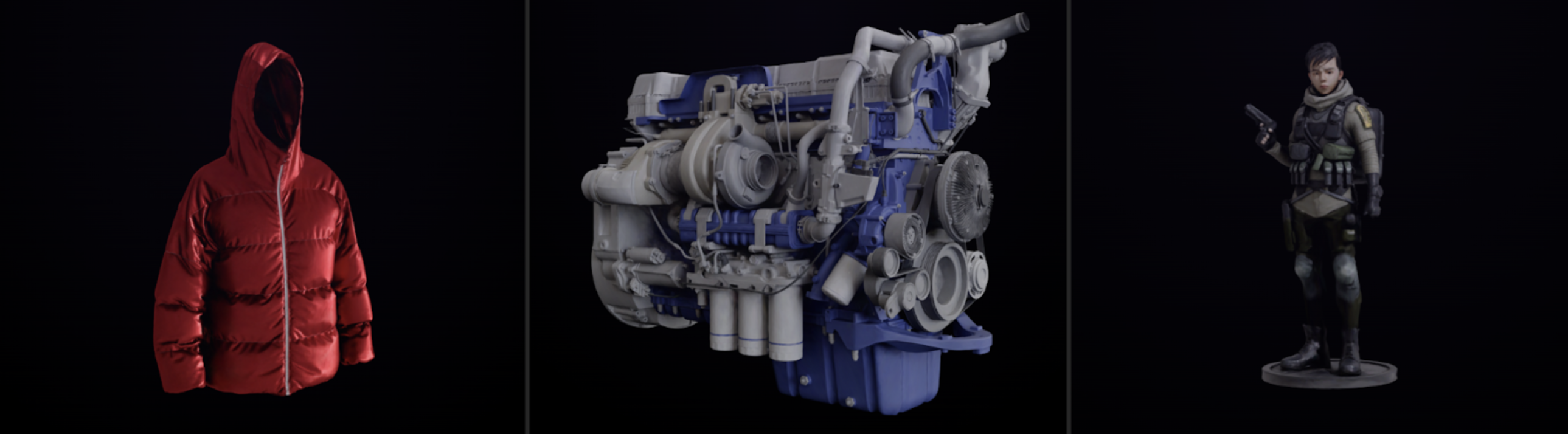
Separately, Playbook organizes production assets and Miris streams high-fidelity 3D. But the significance of the integration is that it expands what's possible inside Playbook, bringing interactive 3D review into the same surface where teams already manage their assets.
Playbook provides a rich media experience for 2D content today like images and video, and users are able to store, organize, and discover 3D assets. With Playbook’s partnership with Miris, they take the next step in allowing their users to interact with 3D assets inside the library. Every review will be able to remain within the library entirely instead of opening a DCC tool, generating a proxy, or exporting a video) before evaluation can begin.
Miris makes interactive, high-fidelity 3D review possible inside Playbook for the first time. Playbook becomes the system of record for production assets and collaboration. Miris becomes the streaming layer that makes it possible to review those assets accurately, on any device, at the fidelity they were authored.
Teams stop exporting proxies. They stop converting formats. They stop losing fidelity between creation and review.
Faster review cycles. Eliminating the proxy export step removes a recurring bottleneck from every review round. For teams shipping multiple assets per sprint, the cumulative time saving compounds quickly.
Higher confidence in visual decisions. Materials, lighting response, and microdetail are visible to reviewers, not abstracted away by compression or format conversion. Decisions made on the streamed asset reflect what will actually ship.
Less miscommunication. Feedback attached to the 3D asset in context is more precise than notes referencing a timecode on a proxy that may already be out of date.
Broader participation. Stakeholders who don't live in a DCC tool (producers, directors, clients, external partners) can meaningfully review 3D work from any device, without specialized software or hardware.
If your team is running review cycles that depend on proxy exports, or sending reviewers to separate tools to evaluate assets that live in Playbook, this integration is worth a close look. While the integration is coming soon, you can request early access by signing up for the Miris beta.
Playbook manages production assets and makes them discoverable. Miris makes high-fidelity interactive 3D review practical across devices and real-world networks. Together, they make it possible to review 3D content the way it was built; inside the library, at full fidelity, without the export step.
.jpg)