The challenge
Production teams want to review interactive 3D assets at the fidelity they were authored without exiting their asset management platform, but have been technically limited from doing so. Today, teams load up an asset in a DCC tool and export turntable videos — flattening the reviewer's experience. If teams want a reviewer to interact with the 3D asset, they create lightweight, less complex assets for publishing interactively on the web. These web-friendly exports remove the intricacies and fine detail which artists spend their effort creating in their authoring tools. Both workarounds introduce a tradeoff: either the reviewer sees a proxy of what the artist actually built (low fidelity glTF), or the reviewer is restricted to reviewing what the artist chose to export to video.
These tradeoffs lead to more revision cycles, and compounding costs across the journey to final pixel. Material approvals, lighting evaluations, and detail-level QA all suffer when the source asset and the reviewed asset are not the same thing.
Streaming a 3D asset interactively to a browser required either degrading it to meet web format limits (cheap but visually lossy) or spinning up expensive cloud infrastructure to pixel stream. Neither option was practical for production review at scale. So most teams flattened their 3D into 2D, and the workflow suffered accordingly.
Why Playbook chose Miris
Games, fashion and e-commerce, entertainment, and media already run on 3D, and a growing number of industries are building their core products and businesses around 3D as it moves beyond niche use cases. As those assets flow into the media asset storage market, Playbook wants to be ready to support them, and with Miris, that support arrives with faster, richer reviewing built in.
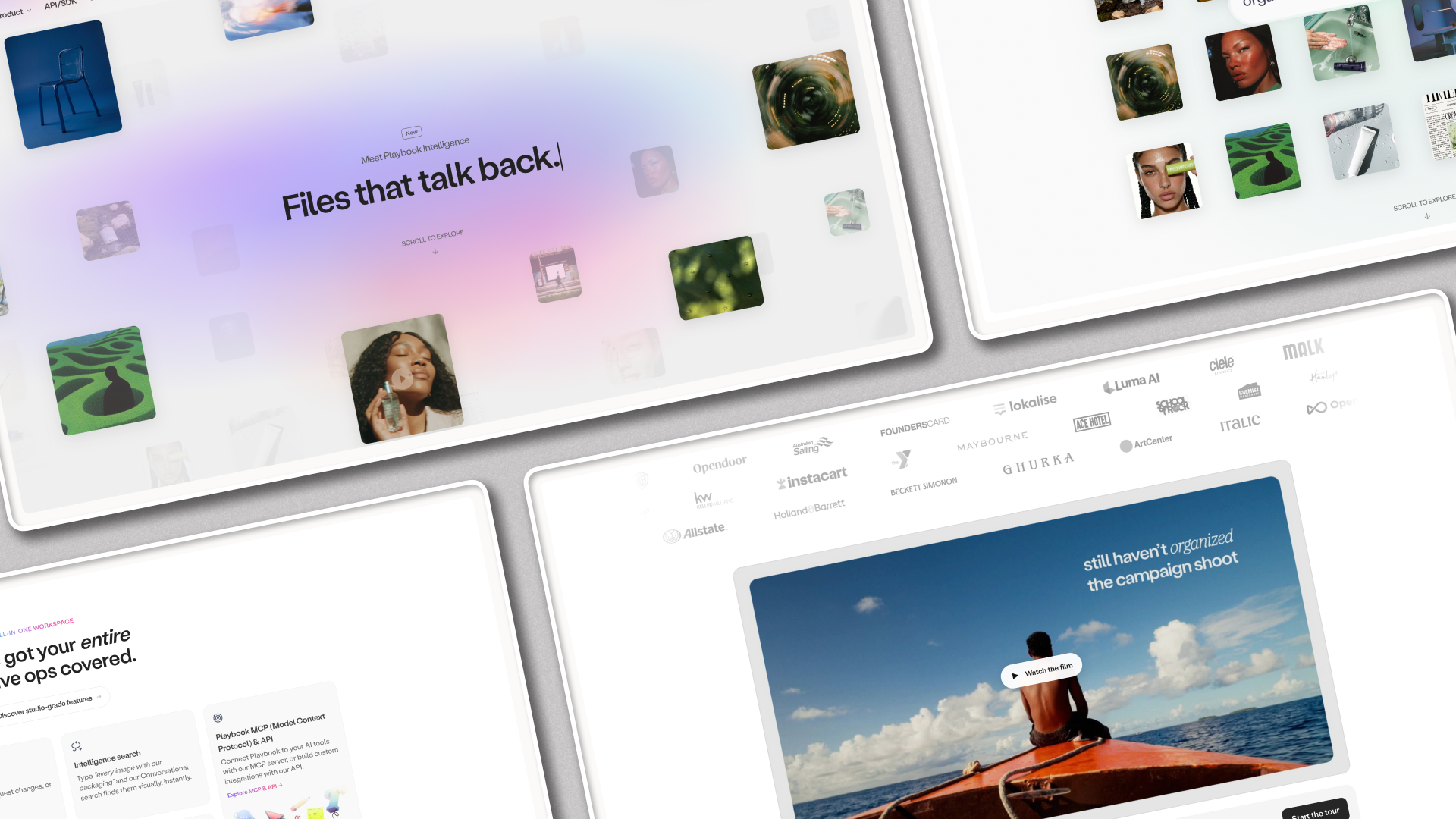
Playbook integrated Miris to bring native, interactive 3D streaming into the asset library without standing up expensive cloud GPUs for streaming or spending costly time optimizing assets for web reviews. Assets are processed once upstream through Miris, then stream adaptively into Playbook's web-based view. Reviews happen on the same surface where teams already organize, search, and collaborate on production content, on any device, anywhere in the world.
How Playbook uses Miris
Miris is integrated directly into the Playbook asset detail view. Any Miris-conditioned 3D asset streams interactively in the browser, alongside the metadata, version history, and feedback tools Playbook users already rely on.
The end-to-end workflow inside Playbook looks like this:
- Upload once, organize automatically. The technical artist or vendor uploads the source asset to Playbook. AI-driven image recognition and tagging make the content immediately searchable, with no manual organization required.
- Find what matters. Teams can search by visual components or abstract search requests rather than navigating folder hierarchies and guessing at file names. Playbook users are able to find any indexed 3D assets, even through less specific queries like fictional characters.
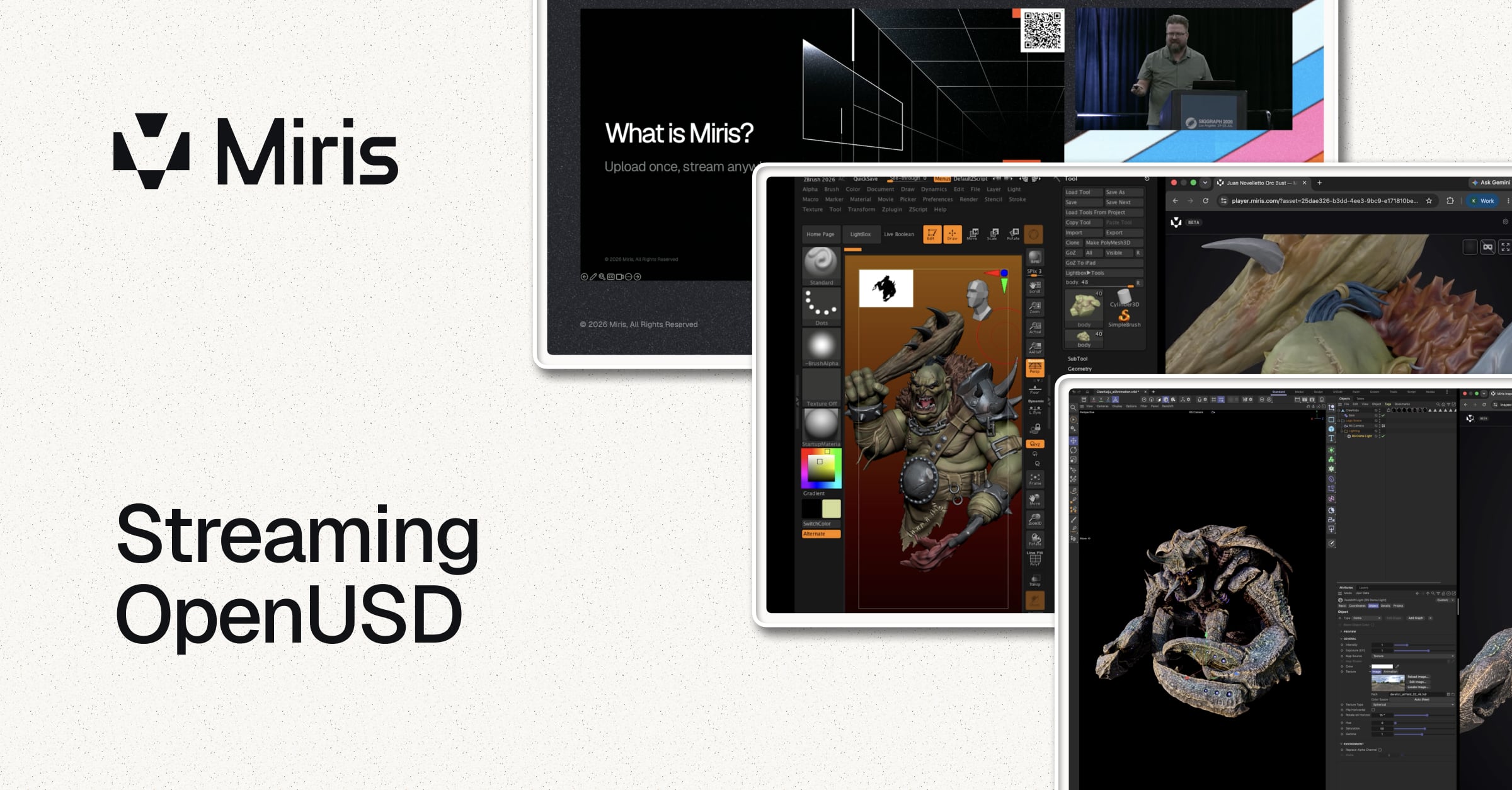
- Stream high-fidelity 3D instantly. Reviewers rotate the asset, inspect material response, and zoom into surface detail in the browser, on any device. No export, no conversion, no DCC tool needed.
- Attach feedback in context. Reviewers reference specific geometry, materials, or surface details on the actual 3D asset, not a time-coded note on a turntable video.
- Compare versions without losing context. When assets update, reviewers evaluate changes against prior iterations inside the same library view. Review history, annotation context, and version state stay intact.
Results
Reviewers evaluate the asset at the fidelity it was authored, on the device they already have, removing the proxy export step. Materials, lighting response, and microdetail are visible to every reviewer, not abstracted away by compression or format conversion. Decisions made on the streamed asset reflect what will actually ship.
Stakeholders including producers, directors, clients, and external partners, can review 3D work meaningfully from any device, without specialized software or hardware.